Managing your Office 365 mailbox data is crucial, especially when it comes to avoiding data loss due to accidental deletion, cyberattacks, or migration errors. Here's a simple step-by-step guide to back up and export your Office 365 mailbox data efficiently.
Step 1 – Log In to Your Microsoft 365 Admin Center
Start by signing in to your Microsoft 365 Admin Center with your admin credentials. From the dashboard, navigate to the Exchange Admin Center where you can manage all mailbox settings and export options.
Step 2 – Use the Built-in eDiscovery Tool
Microsoft offers an eDiscovery feature under the Compliance Center. You can create a content search, apply filters by date, sender, or keyword, and export the results as a PST file. However, this method can be time-consuming and requires technical knowledge.
Step 3 – Export via Outlook
Another manual method is connecting your Office 365 account to Outlook and using the Import/Export wizard to save emails as a PST file locally. This works well for individual mailboxes but is not ideal for bulk exports.
Step 4 – Use a Professional Backup Tool
For a seamless and complete backup experience, use the
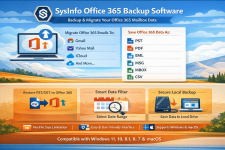
Cigati Office 365 Backup and Restore Tool. It allows you to back up and export entire Office 365 mailboxes — including emails, contacts, calendars, and attachments — into multiple formats like PST, PDF, EML, MBOX, and more. It supports bulk mailbox backup, incremental backup, and date-range filters, making it perfect for both personal users and IT administrators.
Step 5 – Schedule and Automate Backups
Once your initial backup is complete, set up a regular backup schedule to ensure your data is always protected. Automated backups eliminate the risk of forgetting manual exports and keep your mailbox data consistently safe.
Step 6 – Verify the Exported Data
Always open and review your exported files after every backup session. Confirm that all folders, attachments, and email threads are properly saved and accessible before considering the backup complete.
Backing up your Office 365 data regularly is not just good practice — it's essential for business continuity and compliance. Don't wait for a disaster to remind you!